
Rising HOA Fees and Liens: Could You Lose Your Home in 2026?
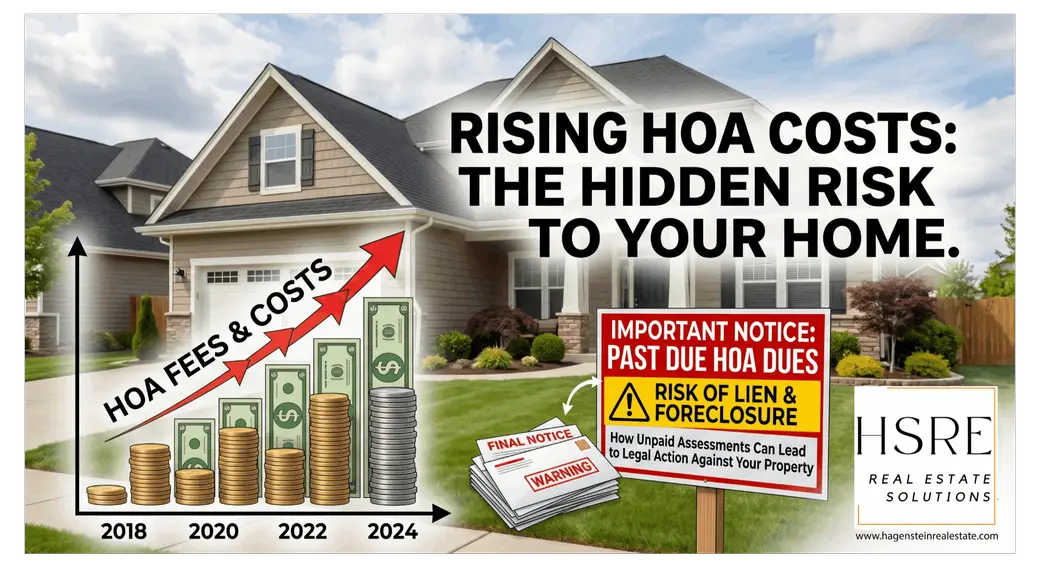
The Hidden "Shadow Mortgage": Why HOA Liens Are Spiking in 2026 (And How to Protect Your Home)
When you bought your home, you probably spent a lot of time looking at the mortgage rate, the property taxes, and the price of the house. But did you pay close attention to the homeowners association (HOA) fees?
For millions of Americans, HOA fees used to be just a small monthly cost to keep the neighborhood pool clean and the grass cut. Not anymore. Today, rising HOA costs are acting like a "shadow mortgage." They are creeping higher every single year.
Have you noticed your own neighborhood fees going up? You aren't alone. In fact, people are struggling to pay them so much that HOA liens jumped by 8.6% recently, with nearly 285,000 filings nationwide in just one year.
So, what exactly is going on? Why are so many people falling behind? And the scariest question of all: could you actually lose your house over a neighborhood rule?
Let's break down everything you need to know about HOA problems in 2026.
What is an HOA Lien?
Before we talk about why things are getting worse, we need to answer a basic question. What happens if I don't pay my HOA?
When you buy a house in a neighborhood with an HOA, you agree to follow their rules and pay their dues. If you stop paying your HOA fees, the neighborhood board doesn't just send you a politely worded letter. They can legally place a "lien" on your property.
Think of a lien like a giant, invisible sticky note attached to the title of your house. It tells the whole world that you owe a debt. If you have an HOA lien on your house, you usually cannot sell your home or refinance your mortgage until you pay that debt off completely.
Why Are HOA Liens Spiking Right Now?
If you feel like your monthly bills are heavier than ever, you are right. But why are unpaid HOA dues suddenly such a massive problem across the country?
Here are the three main reasons we are seeing this huge spike:
1. Insurance is through the roof. Did you know that the HOA has to buy insurance for the neighborhood? They have to cover the clubhouse, the entrance signs, the private roads, and the pool. Over the last few years, property insurance costs have exploded. To pay that massive insurance bill, the HOA has to pass the cost directly to the homeowners.
2. Everything costs more to fix. Inflation hasn't just hit the grocery store. It hit the construction world, too. If the neighborhood needs to fix a broken sidewalk or put a new roof on the clubhouse, the materials and the labor cost way more than they did five years ago.
3. The "Catch-Up" Game. Many neighborhoods are getting older. For years, some HOA boards tried to be nice by keeping fees artificially low. But now, the roads are cracking and the community pipes are leaking. They have no money saved in their "reserve fund." To fix these sudden emergencies, they hit homeowners with "special assessments"—which are huge, unexpected one-time bills.
Can an HOA Really Take Your House?
This is the part that scares most homeowners. Can you actually face an HOA foreclosure?
Yes. You absolutely can.
Many people think that as long as they pay their main bank mortgage, they are safe. That is a dangerous myth. In many states, HOA liens have "super-priority" status. This means the HOA actually has incredible legal power.
Even right here in Ohio, state laws give HOAs very strong collection powers. Courts have ruled that HOA assessments are legally binding contracts. Whether you owe $5,000 in missed monthly payments or $800 in daily fines because your trash can was left out too long, the HOA can start the foreclosure process.
Have you ever wondered how a small fine turns into a lost home? It happens because of late fees and lawyer bills. If you owe $200 in unpaid HOA dues, the HOA might hire a lawyer to collect it. Suddenly, they add the lawyer's $1,500 fee to your bill. If you can't pay that, they file a lien. If you still can't pay, they can legally auction off your house to get their money.
How Do You Protect Yourself and Your Home?
Reading all of this can feel pretty heavy. But don't panic! There are very clear steps you can take to protect your family and your property from rising HOA costs.
-
Read the Homeowners Association Rules: Do you know where your HOA rulebook is? Dust it off and read it. Know exactly what you can be fined for. Don't give the board an excuse to charge you for the wrong color paint or long grass.
-
Go to the Meetings: HOA boards are just made up of your neighbors. If you want a say in how much they are spending, you have to show up to the meetings. Ask questions about the budget. Find out if they are saving enough money for future repairs.
-
Never Ignore the Mail: If you get a letter saying you have unpaid HOA dues, do not throw it in the trash! Ignoring the problem is how late fees and lawyer costs pile up.
-
Ask for a Payment Plan: If you fall on hard times and can't pay your HOA fees, call the board immediately. Most HOAs do not want to take your house. They just want the money to pay the neighborhood's bills. If you communicate early, they will usually let you set up a monthly payment plan to catch up.
The Bottom Line
Living in a neighborhood with an HOA can be great. It keeps property values up and the streets looking nice. But those benefits are coming at a much higher price these days.
By understanding how HOA fees work, keeping up with the homeowners association rules, and knowing what to do if you fall behind, you can keep your home safe.
Have you had a crazy experience with rising HOA fees in your neighborhood? Let us know in the comments below!
Categories
Recent Posts








Real Estate Advisor License ID: 2020002093
+1(513) 323-6822 | ahagenstein@hsrellc.com