
Buying a Home at Auction: Everything You Need to Know
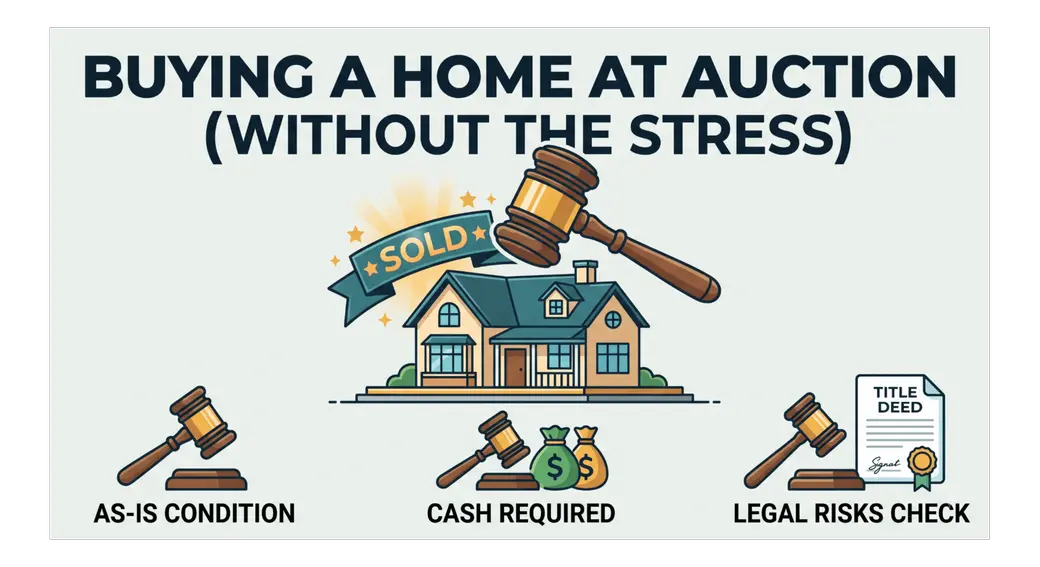
Buying a Home at Auction: Everything You Need to Know (Without the Stress)
Have you ever been scrolling through real estate listings, found a stunning home with an eye-popping low price tag, only to see two words in the description: "Up for Auction"?
If you felt a mix of excitement and confusion, you are not alone! Buying a home through an auction is quite different from buying through traditional agent-brokered listings. While home auctions offer fantastic opportunities to find a bargain, they also come with a unique set of rules, risks, and financial requirements.
In this guide, we break down what an auction listing actually means, how the buying process works step-by-step, and how to decide if an auction property is right for you.
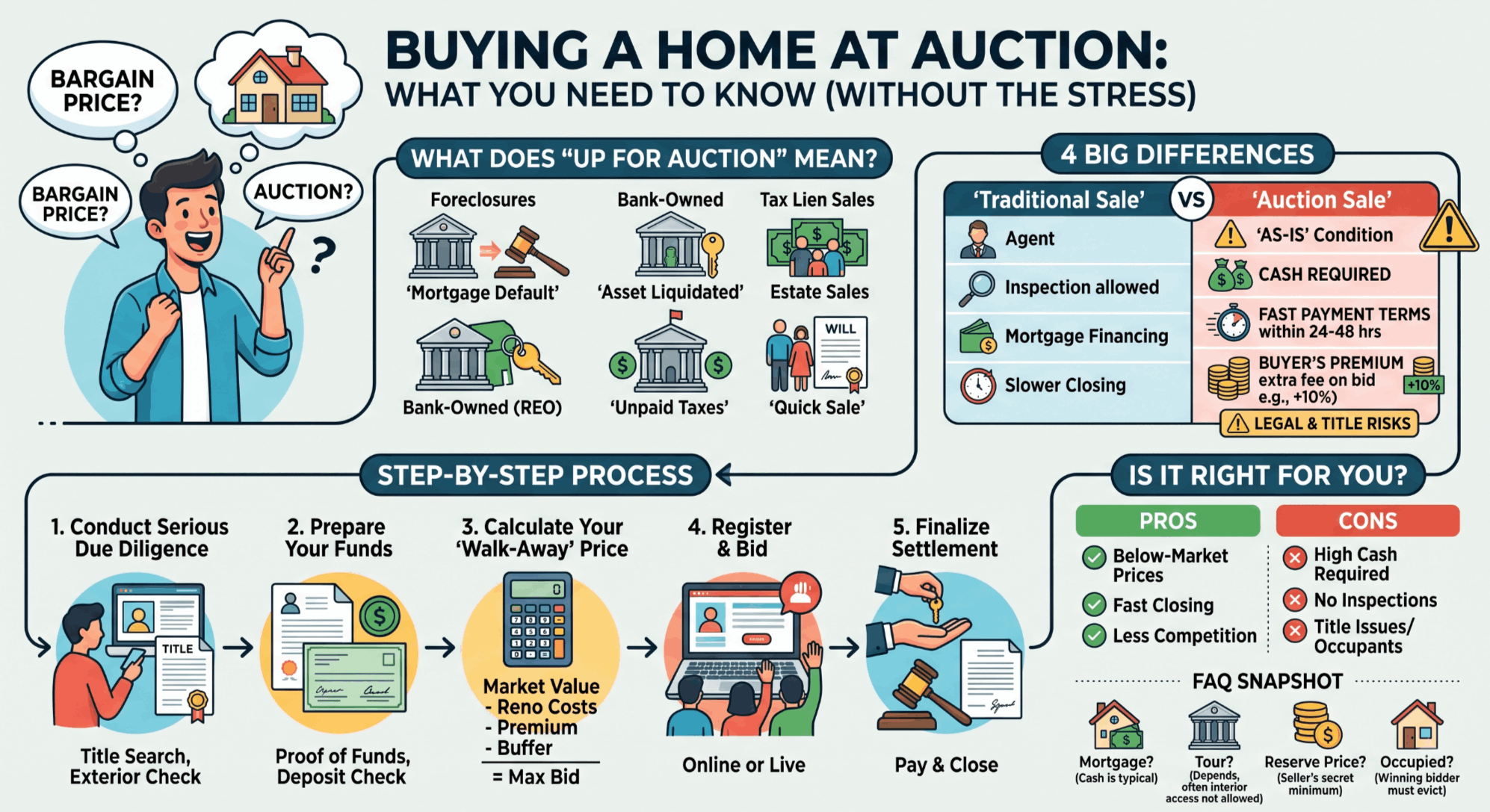
What Does "Up for Auction" Actually Mean?
When a home is listed "up for auction," it means the property is being sold to the highest bidder in a structured, competitive event rather than through typical back-and-forth price negotiations between a buyer and a seller.
Properties usually end up at auction for one of a few common reasons:
-
Foreclosures: The homeowner defaulted on their mortgage, and the lender is selling the property to recover the debt.
-
Bank-Owned (REO): The bank took ownership after an unsuccessful foreclosure sale and is now liquidating the asset.
-
Tax Lien Sales: The property was seized by local government due to unpaid property taxes.
-
Estate or Liquidation Sales: Heirs or sellers want to sell a property quickly without holding open houses or paying long-term carrying costs.
4 Big Differences Between Auction Homes and Traditional Homes
Before you jump in with a bid, it is essential to understand how real estate auctions differ from traditional sales.
1. "As-Is" Condition
Auction homes are almost always sold "as-is." That means you accept the home in its current state—wobbly foundation, leaky roof, or all! Unlike traditional home sales, there are no seller repair credits, post-inspection price renegotiations, or seller disclosures. In many foreclosure auctions, you cannot even tour the interior before bidding.
2. Fast Payment Terms & Cash Requirements
While traditional purchases give you 30 to 45 days to secure a mortgage, auctions move fast. Many platforms require full payment via cash, wire transfer, or cashier's check within 24 to 48 hours. Unless an auction explicitly states that conventional financing or hard-money loans are accepted, assume cash is required.
3. The "Buyer’s Premium" Fee
When you win an auction, you usually pay more than just your winning bid. Most auction companies charge a buyer’s premium—an added fee ranging from 5% to 10% of the final bid—to cover administrative costs.
Example: If your winning bid is $200,000 and there is a 10% buyer’s premium, your true purchase price before closing costs will be $220,000.
4. Legal & Title Risks
Some auction properties come with hidden surprises, such as unpaid secondary liens, delinquent taxes, or existing occupants/tenants who refuse to leave. Unseating an occupant after closing often requires formal legal eviction proceedings.
How to Buy an Auction Home: Step-by-Step
If you are ready to explore an auction home, following this structured process will protect your wallet and lower your risk.
Step 1: Research & Title Search
Step 2: Secure Funds & Deposit
Step 3: Calculate Max Bid
Step 4: Register & Bid
Step 5: Win, Pay & Close
Step 1: Conduct Serious Due Diligence
Never bid blind. Hire a local title company or real estate attorney to run a preliminary title search on the property to verify there are no hidden liens or tax judgments. Always drive by the address to inspect the exterior, neighborhood, and general upkeep.
Step 2: Prepare Your Funds
Most auction platforms require proof of funds (like a bank statement) and a refundable registration deposit—often 5% to 20% of your expected bid—just to participate in the event.
Step 3: Calculate Your "Walk-Away" Price
Set a firm bidding limit before the auction begins so emotion does not take over. Use this quick formula to find your maximum bid:
Maximum Bid = Estimated After-Repair Market Value - Estimated Renovation Costs - Buyer's Premium - Safety Buffer (20%)
Step 4: Register and Bid
Whether attending a live courthouse auction or bidding on an online platform (such as Auction.com, Homespassed, or Xome), follow the platform's specific guidelines. Stick strictly to your predetermined maximum bid!
Step 5: Finalize Settlement
If you win, you must sign the purchase contract immediately and pay your earnest money deposit. Complete the final wire transfer or payment within the mandated timeframe (usually 24 hours to 30 days depending on the platform).
Is an Auction Property Right for You?
| Pros | Cons |
|
Below-Market Prices: Great potential for equity. |
High Cash Requirements: Financing is rarely allowed. |
|
Fast Closing: Minimal waiting or lengthy escrows. |
No Inspections: Risk of major hidden repairs. |
|
Less Competition: Fewer casual buyers bid. |
Title Issues: Potential back taxes or occupant evictions. |
Frequently Asked Questions (FAQ)
Can I get a mortgage on an auction home?
Generally, no. Most auctions require cash, wire transfers, or cashier's checks. However, some online "REO" auctions do allow pre-approved conventional mortgages or hard-money financing if specified in the listing details. Always check the bidding terms beforehand.
Can I tour or inspect an auction home before bidding?
It depends on the auction type. Bank-owned (REO) and private seller auctions often host open houses or allow professional home inspections. Foreclosure and tax lien auctions usually do not allow interior access, meaning you must bid based on exterior views only.
What is a "Reserve Price" in a real estate auction?
A reserve price is the confidential minimum price the seller is willing to accept for the property. If the highest bid does not meet or exceed this hidden threshold, the seller is not obligated to sell the home.
What happens if the auction property is still occupied?
If the property has squatters, previous owners, or tenants who will not leave, the winning bidder becomes responsible for legally evicting them after closing. You should factor potential legal fees and eviction delays into your initial offer.
Ready to Explore Your Local Market Options?
Navigating real estate auctions requires careful research, fast execution, and local market expertise. If you have questions about a specific property or want help finding great opportunities in our area, contact our team today—we are here to guide you every step of the way!
Categories
Recent Posts










Real Estate Advisor License ID: 2020002093
+1(513) 323-6822 | ahagenstein@hsrellc.com